Need residential furnace repair in Mesquite?
Tell us what your system is doing and we will connect you with an independent local provider. Request an estimate anytime, with no obligation.
No obligation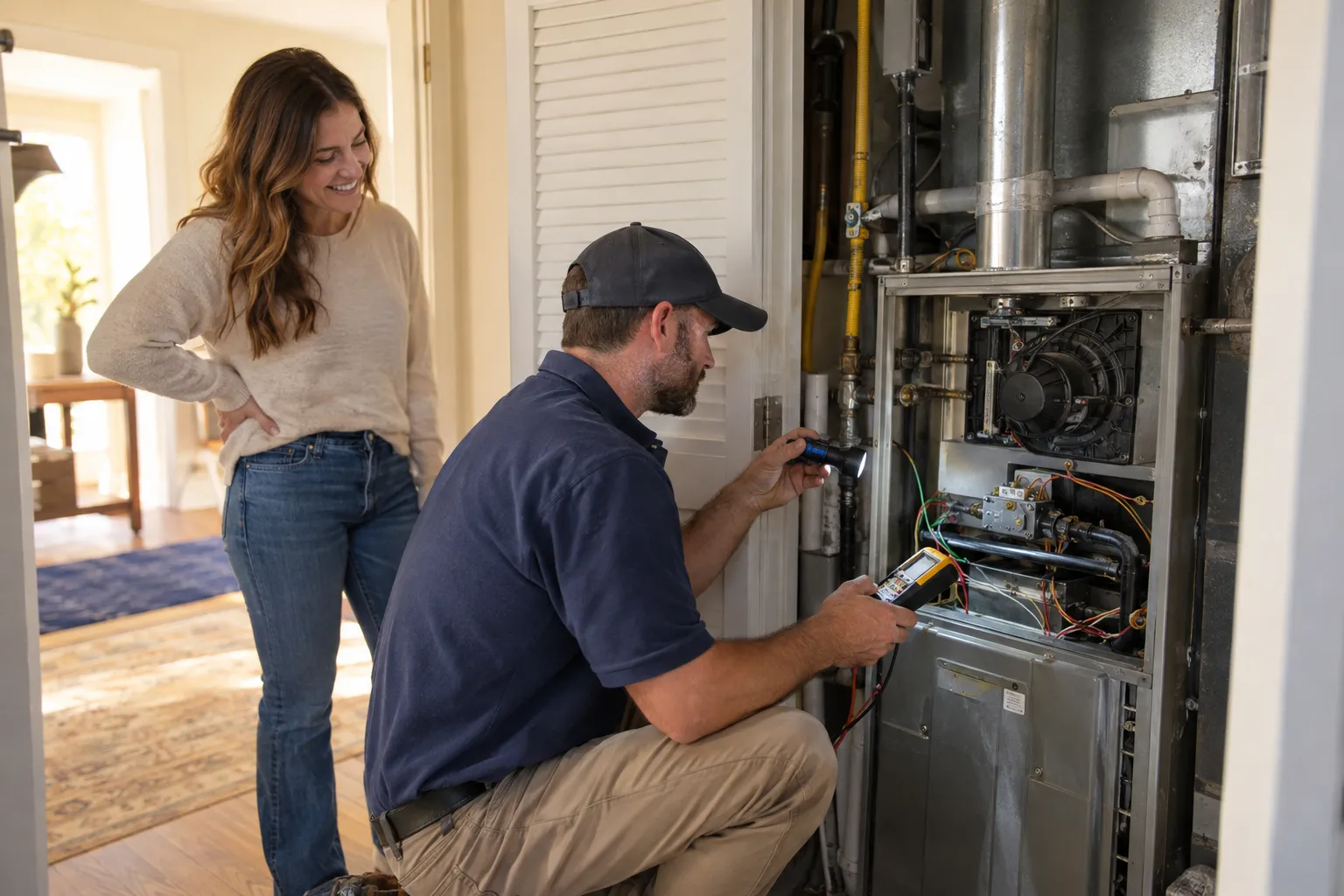
When the heat stops, a house can feel cold fast, even in a region with mild winters. Many homes here have furnaces that sit quiet for months. Then the first cold snap arrives, and the system has to wake up and work hard.
Significantterritory Heating & Air is a referral service. We do not repair furnaces. We connect homeowners in Mesquite and the Mesquite area with independent providers in our network who do. This page explains what to check, what to ask, what warning signs to watch for, and what your options are before anyone starts work. Ask before you hire. A few good questions can save you stress, money and a second visit.
A rotten-egg smell means gas may be in the air. Do not look for the source. Do not flip light switches, use a lighter, or unplug anything.
Leave the house with everyone inside, including pets. Once you are outside and away from the home, phone your gas utility or the local emergency number. Stay out until they say it is safe.
A headache, dizziness or nausea that eases when you leave the house can be a warning sign. Working carbon monoxide alarms near sleeping areas are a smart habit. If one sounds, get fresh air and phone for help.
Some no-heat problems are simple. Try these only if you smell no gas.
Set it to heat and raise the temperature a few degrees above the room. Fresh batteries fix more problems than you would expect.
Furnaces have a power switch near the unit, often like a light switch. Make sure it is on. Then check the breaker panel for a tripped breaker. Reset it once. If it trips again, stop and leave it for a professional.
A clogged filter chokes airflow and can make a furnace shut off to protect itself. If yours is dark and packed with dust, swap it for a new one.
Small changes often show up before a full breakdown.
Bangs, squeals, rattles and scraping are not normal. Note when they happen, because a provider will ask.
If the furnace turns on and off in quick bursts, something is off. It may be airflow, a sensor or a thermostat issue.
Cold rooms, weak airflow or a bill that climbs without a reason can all point to a worn part.
A healthy burner flame is mostly steady and blue. If you see yellow or hear popping, switch the furnace off and ask a provider to look.
In a place with hot, humid summers and short winters, heating gear can go months unused. Dust builds up, parts stiffen, and a worn igniter shows itself only on the first chilly morning. Many attics and closets that hold furnaces also swing between very hot and cool. That wear adds up. A quick checkup before cold weather is worth considering, and a good HVAC service visit can cover both heating and cooling.
A few plain questions tell you a lot about a provider. Here is what to ask and what a solid answer sounds like.
A good answer is a clear yes, plus the willingness to share details so you can verify them with the state.
You want to hear about a diagnostic fee up front and a written quote before any repair work begins. Ask whether the fee applies toward the repair.
A solid provider can tell you the company name and what to expect on arrival, and the person should identify themselves.
Ask about warranties on both parts and labor, and ask for the terms in writing.
The provider listens to your story first, then checks the thermostat, power, filter, igniter, flame, blower and safety switches. They should explain the cause in plain words and show you the failed part if you ask. You then get a quote for your approval. Work starts only after you say yes.
Many visits end with one of a few fixes. Igniters and flame sensors wear out with age. Blower motors and capacitors can fail. Control boards, pressure switches and thermostats sometimes need replacing. A cracked heat exchanger is the serious one, because it can raise safety concerns and is often costly to fix.
There is no single rule, but a few things help you decide.
Many furnaces serve around 15 to 20 years. An older unit with a repair quote that is a big share of a new system's price is worth a second look.
If the same system has needed several repairs in a short time, replacement may make more sense than another patch.
A cracked heat exchanger often tips the balance toward a new unit. Ask the provider to show you the evidence.
Before work starts, you can ask for a repair quote and a replacement quote side by side. If you are searching for furnace replacement near me, compare written quotes, equipment details and warranty terms. A second opinion is reasonable and should never be discouraged.
Furnace failure from wear is usually not covered by a home policy. Some policies may cover sudden damage, so check your policy. Providers can often help document damage for a claim, so keep notes and photos.
Cool, calm, covered. Check for gas first, try the quick fixes, then reach out. Request a callback to check provider availability, or request an estimate and describe what you see.
The provider checks for gas leaks, venting problems and carbon monoxide risks before testing the furnace.
Thermostat, power, igniter, flame sensor and blower are tested to find the true cause.
You get a written price and a plain explanation before any repair begins.
Once you approve, the provider fixes the problem and runs the furnace to confirm it heats properly.
Prices vary by home, furnace type, part and provider. These are typical U.S. ranges only. Always ask for a written quote that lists parts and labor before you approve work.
| Item | Typical range | Notes |
|---|---|---|
| Diagnostic visit | $75 – $200 | Ask if the fee applies toward the repair |
| Igniter or flame sensor | $100 – $400 | Common fix on older units |
| Thermostat replacement | $100 – $350 | Price depends on the model |
| Blower motor | $400 – $1,500 | Varies by motor type and brand |
| Control board | $300 – $800 | Often a part-plus-labor price |
| Heat exchanger | $1,500 – $3,500 | Often compared with replacement |
If you smell gas, leave the home and phone your gas utility or emergency number from outside.
Look at the thermostat, switch, breaker and filter. Stop if anything seems unsafe or keeps tripping.
Request a callback to check provider availability, or send the request form.
Ask questions, compare options, and approve work only when you feel comfortable.
We share the questions to ask and what a solid answer sounds like, so you feel ready.
Providers in our network are local businesses that do the work and set their own prices.
We explain repair and replacement choices in plain words before anyone picks up a tool.
Requesting an estimate is simple, and the choice to move forward stays with you.
Tell us what your system is doing and we will connect you with an independent local provider. Request an estimate anytime, with no obligation.
No obligationTell us what your system is doing and we will connect you with an independent local provider. Request an estimate anytime, with no obligation.
No obligation